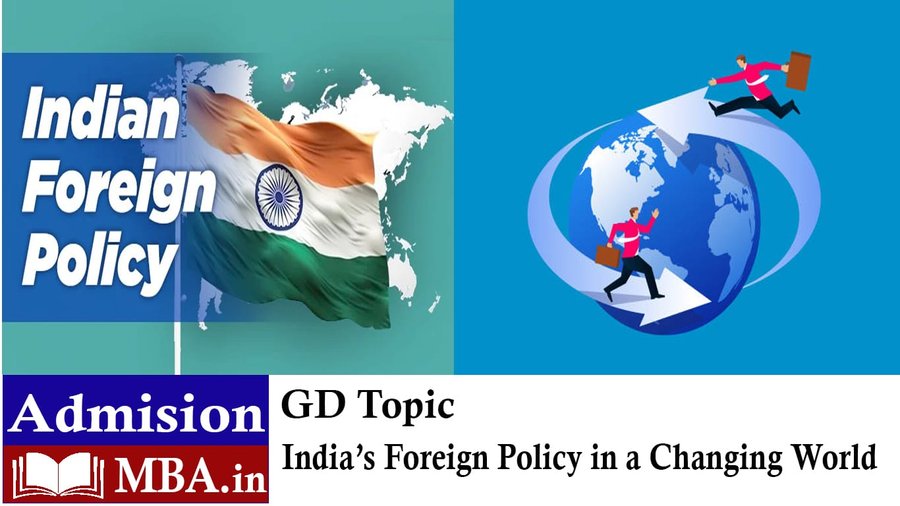
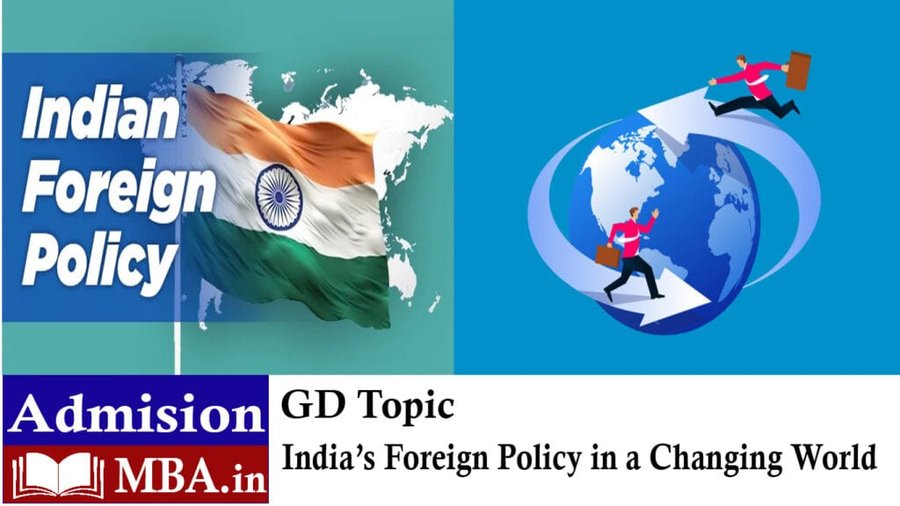
Introduction: The Dynamic Nature of India’s Foreign Policy
- India’s foreign policy is shaped by its geopolitical realities, economic ambitions and strategic interests.
- As the global order evolves rapidly with new powers rising, technological advances and shifting alliances, India must adapt its foreign policy accordingly.
- The policy reflects a balance between safeguarding national security, enhancing economic growth and promoting global peace.
Historical Context and Evolution
- Post-independence, India adopted a policy of non-alignment, steering clear of Cold War bipolarity.
- The focus was on maintaining sovereignty, promoting decolonization and fostering South-South cooperation.
- Over decades, economic liberalization and global changes shifted India’s approach towards pragmatic engagement and multi-alignment.
Strategic Autonomy in a Multipolar World
- India aims to maintain strategic autonomy, avoiding over-dependence on any single power.
- In today’s multipolar world, India engages with the US, Russia, China, EU and other powers based on mutual interests.
- This flexibility enhances India’s bargaining power and diplomatic influence.
India-China Relations: Complex and Critical
- India’s foreign policy is heavily influenced by its relationship with China, marked by cooperation and competition.
- Border disputes and regional rivalry necessitate a cautious and assertive stance.
- India simultaneously pursues economic engagement with China while strengthening strategic ties with other powers to balance China’s influence.
India-US Partnership: Strategic and Economic Dimensions
- India has cultivated a robust strategic partnership with the US, emphasizing defense cooperation, counterterrorism and technology sharing.
- Economic ties have deepened through trade, investment and innovation collaborations.
- This partnership helps India bolster its global standing and counterbalance China’s growing power.
Act East Policy: Strengthening Regional Ties
- India’s Act East policy focuses on enhancing connectivity and cooperation with Southeast Asia and the Indo-Pacific region.
- This includes infrastructure projects, trade agreements and defense partnerships.
- Strengthening these ties counters regional threats and promotes economic integration.
Engagement with Neighbors: Challenges and Opportunities
- India’s neighborhood is vital for its security and economic interests.
- Relations with Pakistan remain tense, with ongoing conflict and diplomacy efforts.
- Engagement with Bangladesh, Nepal, Bhutan and Sri Lanka centers on trade, connectivity and cultural ties, aiming to build a stable regional environment.
Multilateralism and Global Governance
- India actively participates in multilateral institutions like the UN, WTO, BRICS and G20.
- It advocates for reforms in global governance to reflect emerging powers’ interests.
- India’s role in climate change negotiations and sustainable development aligns with its global responsibilities.
Economic Diplomacy: Trade and Investment Focus
- India’s foreign policy increasingly prioritizes economic diplomacy to attract foreign direct investment and promote exports.
- Bilateral and regional trade agreements, such as with ASEAN and RCEP discussions, illustrate this focus.
- Promoting ‘Make in India’ globally enhances manufacturing and job creation domestically.
Defense and Security Cooperation
- India’s foreign policy strengthens defense ties through joint exercises, technology transfers and arms deals.
- Collaboration with countries like the US, France, Israel and Russia improves India’s military capabilities.
- Counterterrorism partnerships and intelligence sharing enhance national security.
Diaspora Diplomacy
- India leverages its large diaspora for cultural diplomacy, investment and global influence.
- The diaspora acts as a bridge, promoting India’s soft power and economic interests abroad.
- Engaging with overseas Indians is a strategic element of India’s foreign policy.
Soft Power and Cultural Diplomacy
- India projects its culture, democracy and values as part of its diplomatic toolkit.
- Yoga, Bollywood, cuisine and democratic ideals enhance India’s image globally.
- Cultural diplomacy builds goodwill and supports strategic objectives.
Technology and Innovation in Foreign Policy
- India uses its growing tech and space capabilities to forge international partnerships.
- Collaborations in space exploration, IT and digital infrastructure strengthen diplomatic ties.
- Technology-driven foreign policy enhances India’s global stature.
Climate Diplomacy and Sustainable Development
- India balances development needs with climate commitments in international forums.
- Leading initiatives like the International Solar Alliance demonstrate India’s proactive role.
- Climate diplomacy aligns India’s foreign policy with global environmental goals.
Challenges: Balancing Global Ambitions and Regional Realities
- India faces challenges like border tensions, global protectionism and geopolitical rivalries.
- Managing relationships with superpowers without alienating others requires diplomatic finesse.
- Internal development priorities must be aligned with external engagements.
India’s Role in Global South Solidarity
- India continues to champion the interests of developing countries in global platforms.
- It promotes South-South cooperation through capacity building, humanitarian aid and trade support.
- This role strengthens India’s leadership in the Global South.
Digital Diplomacy and Public Engagement
- India utilizes digital platforms for diplomacy and public outreach.
- Social media and digital communication enhance transparency and citizen engagement.
- Digital diplomacy complements traditional diplomatic efforts.
Future Directions: Vision for a ‘Vishwaguru’ Role
- India aspires to be a global leader or ‘Vishwaguru,’ contributing to peace, prosperity and sustainability.
- Strengthening strategic autonomy, economic resilience and soft power are key.
- A dynamic, responsive foreign policy will enable India to navigate uncertainties and seize opportunities.
Impact of Global Crises on India’s Foreign Policy
- The COVID-19 pandemic, geopolitical conflicts and economic disruptions have tested India’s diplomatic agility.
- India’s vaccine diplomacy showcased its capacity for global leadership in crisis response.
- Adapting to evolving global challenges remains a priority.
Conclusion: Adapting and Leading in a Changing World
- India’s foreign policy is evolving to meet the demands of a complex, multipolar world.
- Balancing national interests with global responsibilities, India seeks to secure its strategic, economic and humanitarian goals.